Turmeric: Can This Golden Root Support Your Joints?
Turmeric has a long history in traditional herbal medicine, but can this golden root really help aching joints? Explore its properties and current research on its uses for osteoarthritis. Along with its connection to black pepper and safety considerations to deepen your knowledge 🌿
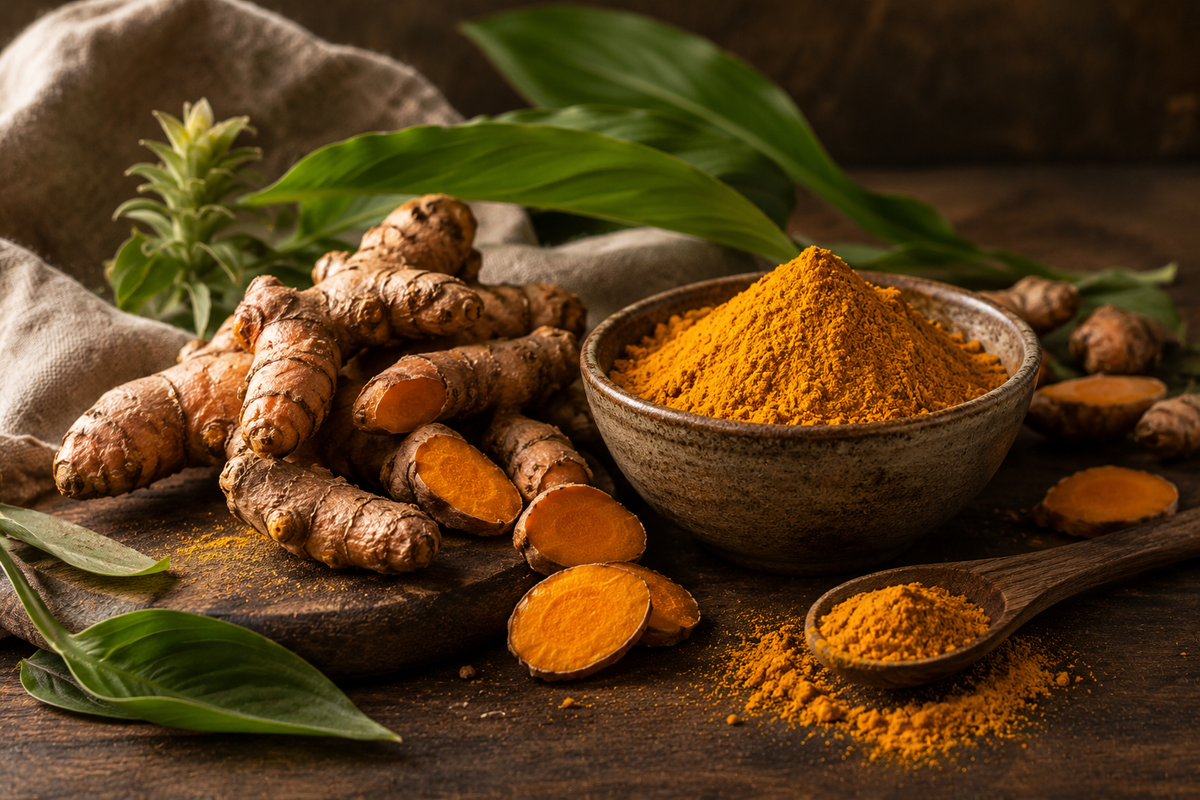
Few kitchen spices are as recognisable, with vibrant golden colour and earthy warmth. Turmeric, Curcuma longa or haldi and haridia in its home region of South Asia. A member of the ginger family, Zingiberaceae. Its historic roots run deep in cuisine and traditional Ayurvedic medicine (Chevallier, 2023). But can this golden rhizome really support aching joints? Modern science is trying to answer this very question!
When joints become painful
Many issues can cause painful joints. Osteoarthritis (OA) is one of the most common, affecting people of all ages. It affects the whole joint, including the protective cartilage, underlying bone and surrounding tissues. Although age increases the likelihood of developing OA, other factors like previous injuries, genetic predisposition or physical stress to the joints can also contribute. Commonly affects the joints in the hands, hips and knees (NHS, 2023).

Symptoms vary from person to person, but they include pain with movement, stiffness after rest, and reduced mobility. This makes everyday activities challenging and unpleasant. OA is a chronic condition, and as mentioned, its course and symptoms can range from stable to fluctuating, mild to severe. Unfortunately, there is no cure, only management with tailored exercises, weight management where appropriate, and anti-inflammatory medication. The conventional approach helps people stay active by reducing discomfort (NHS, 2023).
What can turmeric do?
Medicinally, it’s the rhizome of turmeric that’s used. It is the underground stem often mistaken for a root. It contains curcuminoids, including curcumin, along with volatile oils such as turmerones (Thomsen, 2022). Modern research suggests that curcumin influences inflammatory pathways, which may help explain turmeric’s traditional use.
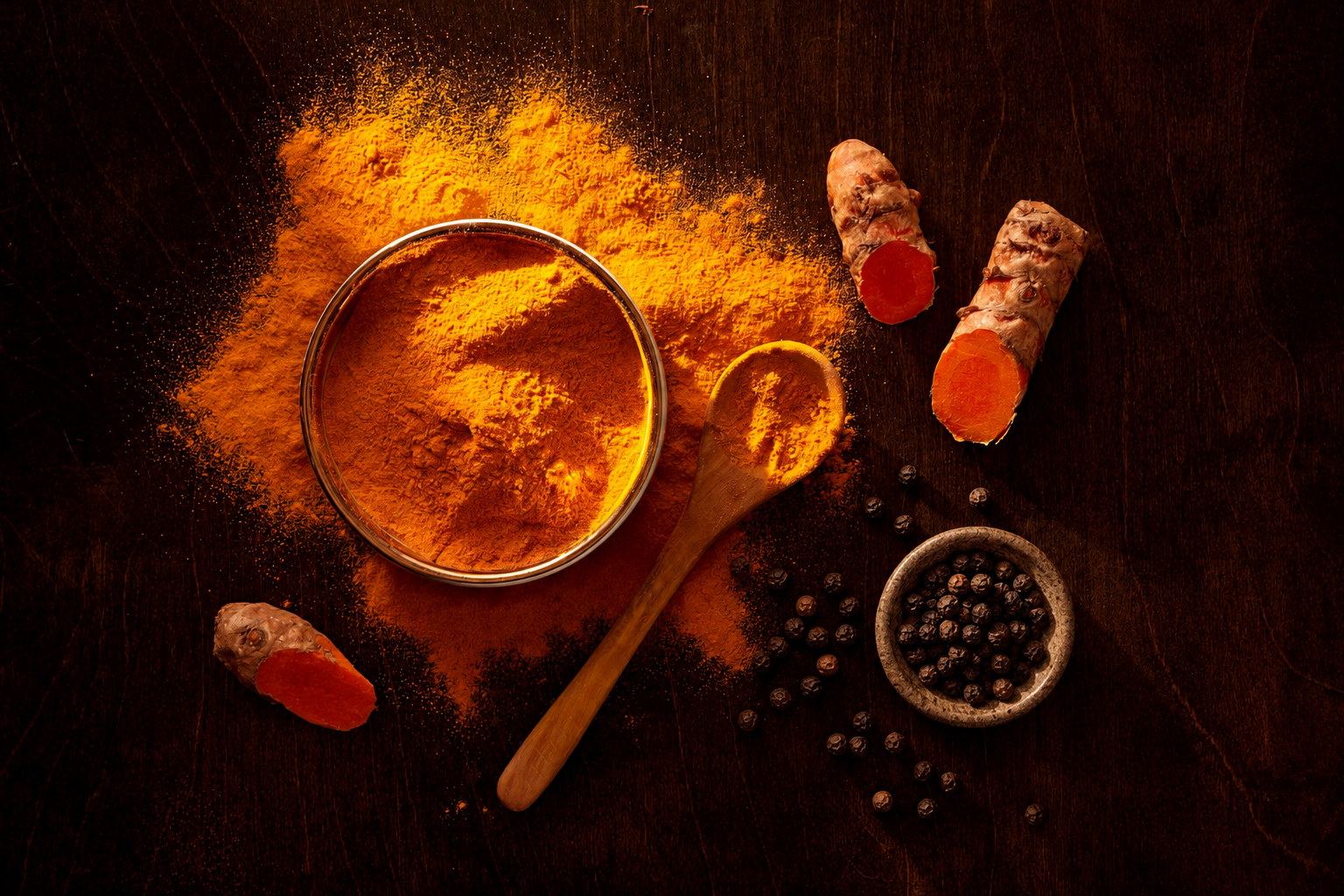
An intriguing link exists between its traditional use and modern research. Ayurveda combines turmeric with black pepper, Piper nigrum, which contains piperine (Chevallier, 2023). In human studies, piperine has been shown to increase curcumin's bioactivity, meaning the amount available for the body to use (Shoba et al., 1998). This shows that traditional uses often prompt valuable scientific research questions. But how does that link to OA?
Some studies suggest that orally ingested turmeric or curcumin products, e.g. supplements, may help reduce OA-related pain and stiffness. However, the evidence is not conclusive, and supplements differ in quality, composition and therefore absorption (NCCIH, n.d.). Turmeric can be a good complementary support alongside contemporary treatment, but it shouldn’t be assumed to be a miracle for cartilage repair.
Using turmeric thoughtfully
Turmeric in food is generally well tolerated; however, concentrated supplements require more caution. Sensitive individuals may experience digestive upsets (NCCIH, n.d.). Reports also note interactions with anticoagulants, some cancer treatments and immunosuppressants, though evidence varies and risks depend on the specific medication and supplement formulation (Thomsen, 2022 & COT, 2024). Always remember to consult your herbalist before taking any supplements!
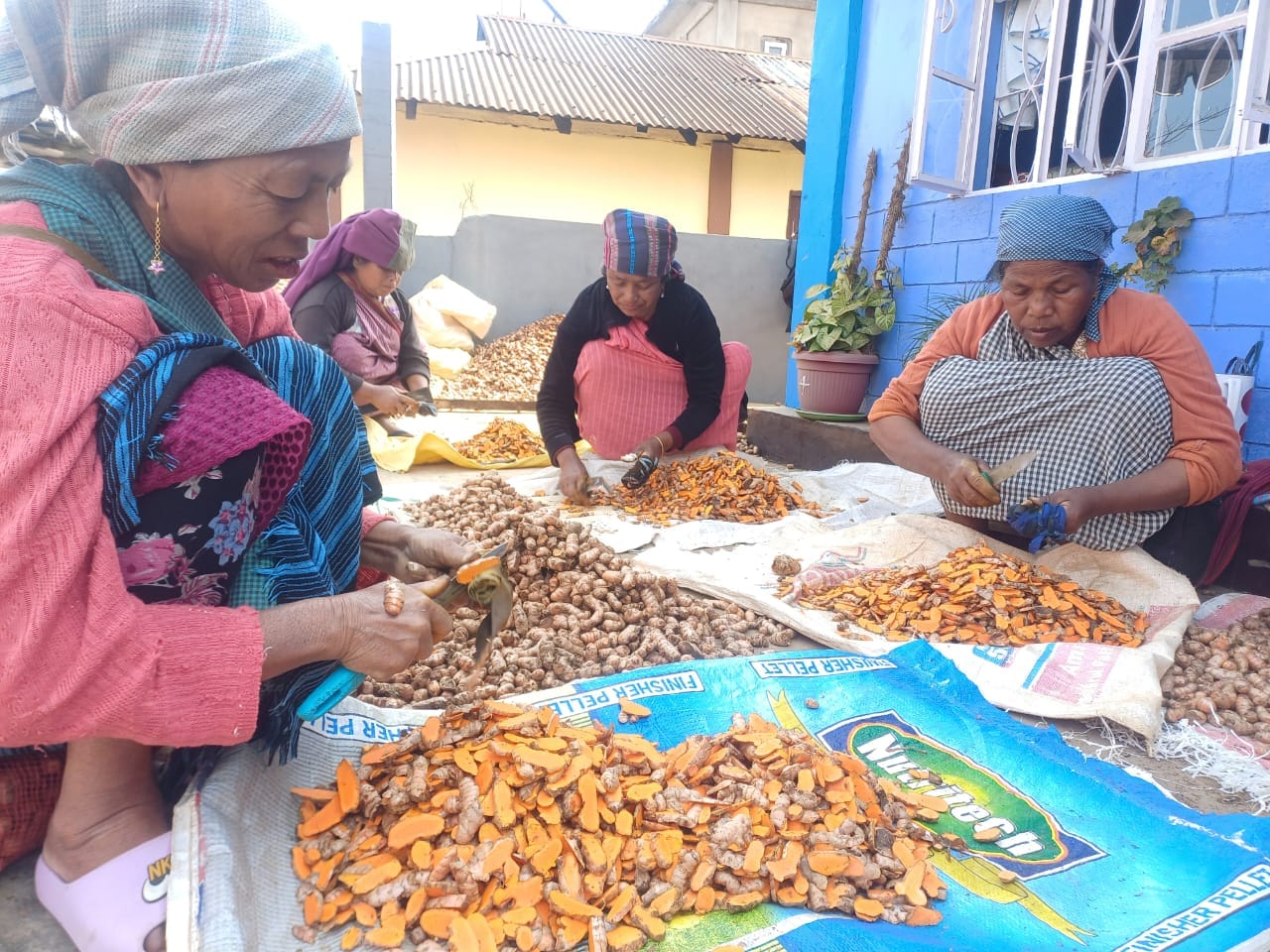
Turmeric is widely cultivated in South Asia, with India as the main cultivator (McVicar & Hobhouse, 2011). When purchasing, look for transparent suppliers with clear sourcing and production practices. This small step toward more responsible purchasing supports farmers and producers.
If joint pain affects your daily life, please get an assessment. Pain doesn’t need to be the norm. Your local herbalist can help you explore whether turmeric is an option for you, taking your health history and current treatments into account. Herbalism works best when the individual, tradition, and evidence meet.
References
Chevallier, A. (2023). Encyclopedia of herbal medicine: 560 herbs and remedies for common ailments (4th ed., revised and expanded). DK Publishing.
Committee on Toxicity of Chemicals in Food, Consumer Products and the Environment. (2024). Turmeric and curcumin supplements: Statement on the potential risk to human health, summary and conclusions. UK Government. https://cot.food.gov.uk/Turmeric%20and%20Curcumin%20Supplements%20-%20Summary%20and%20conclusions
McIntyre, A. (2019). The complete herbal tutor: The definitive guide to the principles and practices of herbal medicine (2nd ed.). Aeon Books.
McVicar, J., & Hobhouse, P. (2011). Jekka’s complete herb book (Rev. ed.). Kyle Cathie.
National Center for Complementary and Integrative Health. (2025, April). Turmeric: Usefulness and safety. https://www.nccih.nih.gov/health/turmeric
National Health Service. (2023). Osteoarthritis. https://www.nhs.uk/conditions/osteoarthritis/
Shoba, G., Joy, D., Joseph, T., Majeed, M., Rajendran, R., & Srinivas, P. S. S. R. (1998). Influence of piperine on the pharmacokinetics of curcumin in animals and human volunteers. Planta Medica, 64(4), 353–356. https://doi.org/10.1055/s-2006-957450
Thomsen, M. (2022). The phytotherapy desk reference (6th ed.). Aeon Books.
🌿 Can turmeric support aching joints?
This golden rhizome has deep roots in Ayurvedic history, and modern research is exploring its potential role in osteoarthritis. But what about pairing it with black pepper?
Discover the traditional wisdom and scientific evidence in my latest blog. ✨
#Herbalism #Turmeric #HerbalMedicine #Osteoarthritis
@betonicaschoolofherbalmedicine