Hawthorn for Heartbreak
Heartbreak & The Emotional Heart
Heartbreak is not confined to bereavement. The end of a close friendship or estrangement can also set the body reeling into a stress response. Grief can disturb sleep, heighten anxiety, cause cardiac abnormalities including hypertension, spasming coronary arteries causing hypoxia, deforming the left ventricle causing hypoperfusion, heart failure/attacks. If unresolved, immune dysfunction, depression, even cancer (Field, 2017). The emotional shock of a cancer diagnosis for example confers a 26.9% higher risk of heart related death in the week following diagnosis (Ji, 2020).
Our language has always recognised this intimate connection between emotional pain and the physical heart. But might that relationship work both ways? Rather than simply a pumping machine, the heart continuously converses with the brain, through nervous impulses, hormonally, with pulse waves and electromagnetic fields. More signals travel from heart to brain than vice versa. Furthermore, the brain’s emotional processing is changed by input from the heart (McCraty, 2015).
By ‘fixing’ the physical heart, may we resolve the stress response?
The Mighty Berry
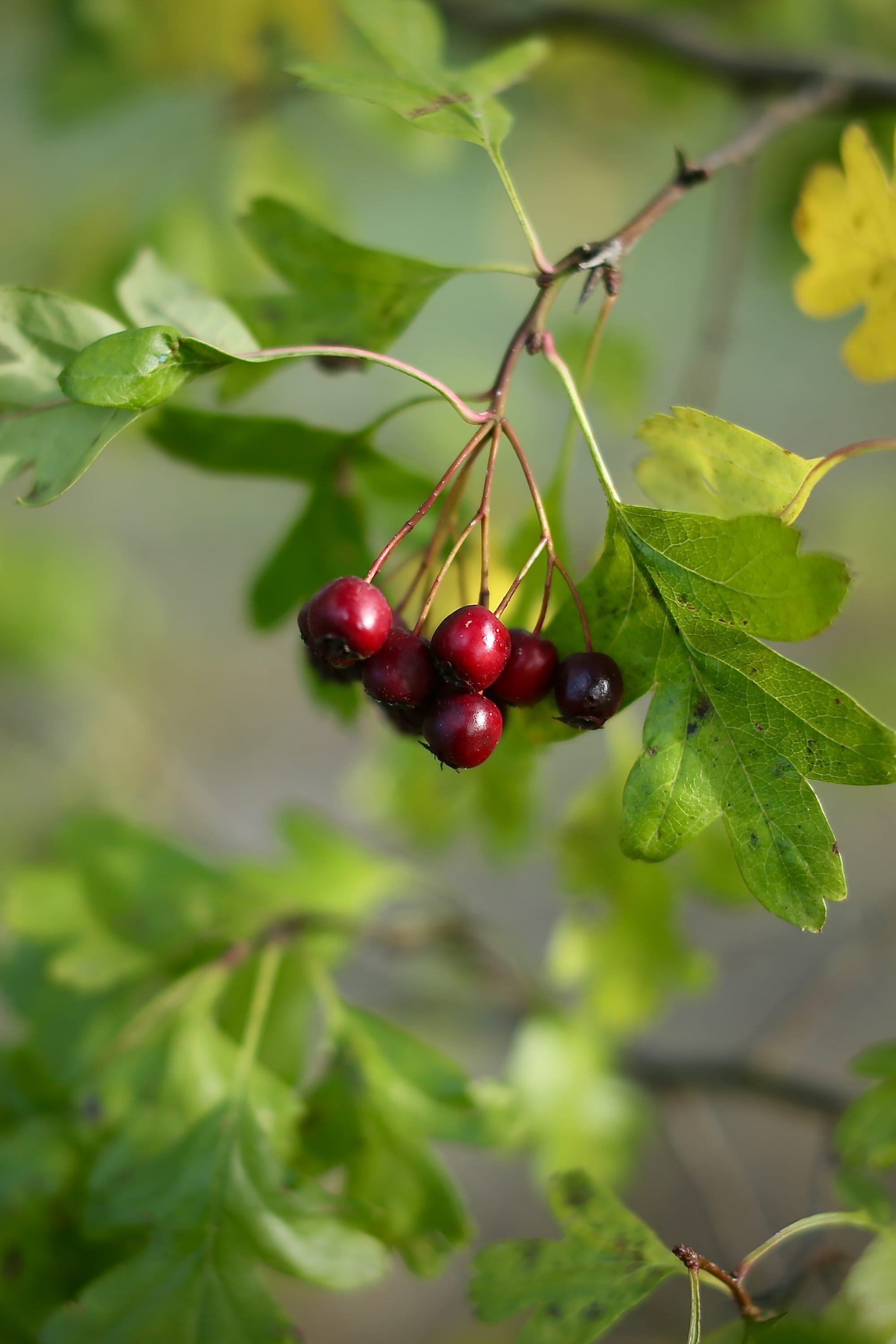
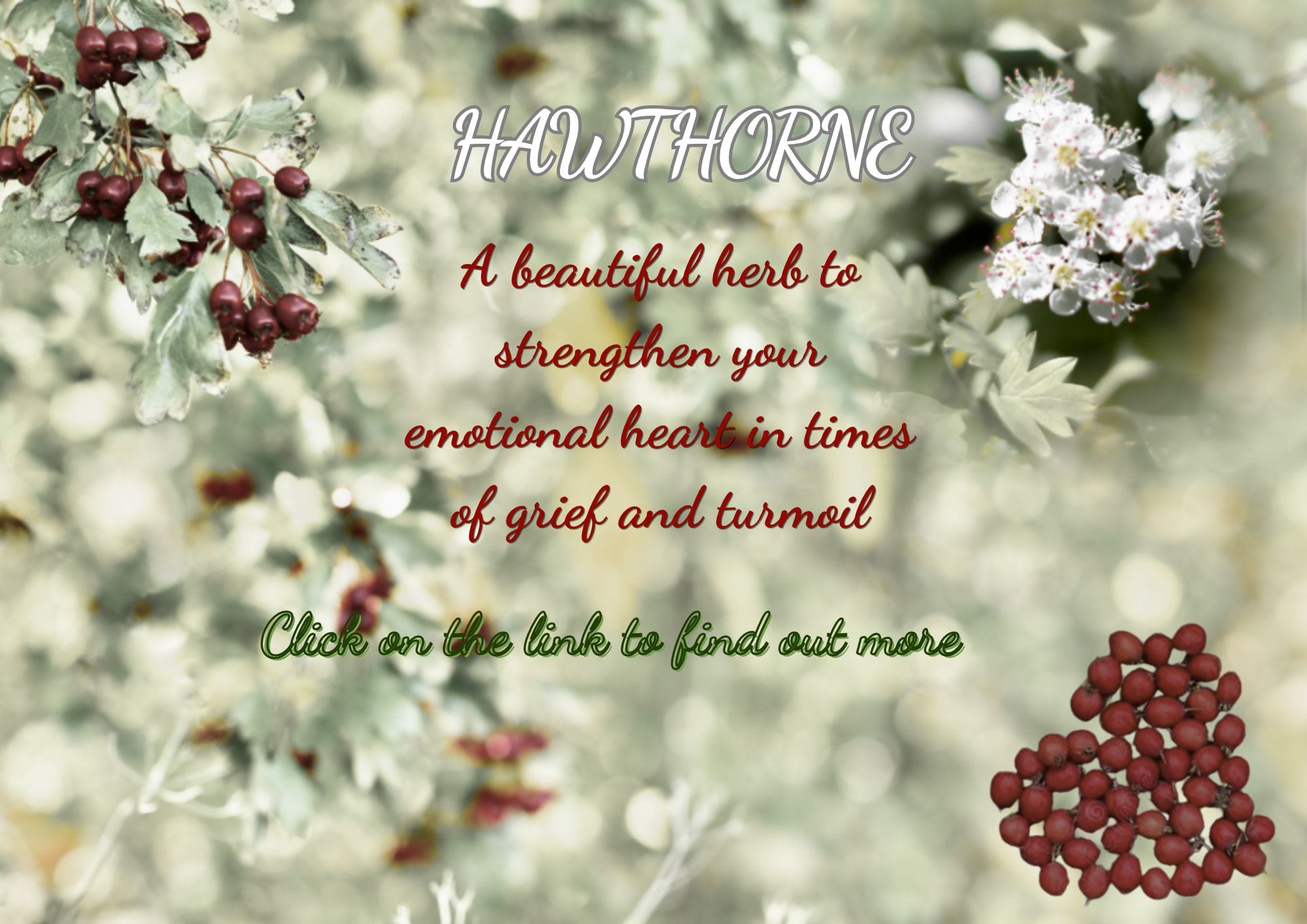
Hawthorn, also known as thornapple, Mayblossom, whiteblossom, belongs to the genus crataegus. The leaves, flowers and berries used in herbal medicine across temperate regions of the globe.
Hawthorn increases heart rate variability (HRV) (Bone & Mills, 2013). A measure of overall heart health, directly impacting the brain’s emotional centre. HRV, a representation of the byplay between the sympathetic and para-sympathetic nervous systems adapting to changing internal environments. A steady heart rate with high HRV signals safety and balance, overriding the stress response, increasing vagal tone, allowing us to accept, process and with time, overcome heartbreak (HeartMath Institute, n.d.). Additionally, the phenolic acids, particularly chlorogenic acid acts directly upon the nervous system to alleviate depression (Lim et al, 2018).
Take any physical heart related/circulatory condition and over time, hawthorn helps if not resolves the condition entirely. This includes blood pressure/pulse irregularities, palpitations, arrhythmias, tachycardia, cardiac hypertrophy, valvular/ coronary insufficiency, heart failure, arteriosclerosis, the list continues (McIntyre, 2019).
The totality of the ‘how’ is not yet fully understood. The almost magical synergistic melding of phytochemical constituents offers so much to our hearts.
The oligomeric proanthocyanidins (OPCs) regulate blood pressure (Ganora, 2009). The flavonoids, mainly vitexin, quercitin, hyperin and OPCs (Heinrich et al, 2024):
- As antioxidants and antiinflammatories, protect against oxidative damage, inhibit plaque accumulation, reduce inflammation
- Make heart contractions stronger and slower
- Dilate coronary arteries and dissolve plaque
- Improving the tolerance of heart cells to hypoxia, preventing ischemic damage (Fisher, 2018)
No herb erases the deep pain of loss, but hawthorn can walk the journey and help lighten the burden along the way.
History & Use
Our ancestors knew. The Western Shoshone tribes of Native American Indians used hawthorn for support during grieving, heartbreak and prevention of heart failure (Smokey, 2019). Europeans wore hawthorn happiness amulets to chase away heartache (Jones). Used in traditional Chinese medicine for treating cardiac and circulatory conditions (Fisher, 2018).So abundant in the U.K. it’s difficult not to trip over hawthorn on country excursions. Safe for children and adults. No known drug interactions with blood pressure medications although advisable to consult a professional if on heart medication (Bone & Mills, 2013). Hawthorn’s support is slow and steady so best taken in low doses over time (Jones, 2023). Buy the herb for teas @liliwenherbs.com or the tincture @napiers.net
For more information on heart rate variability, visit @heartmath.org
For complex conditions, visit a clinical herbalist @betonicaschoolofherbalmedicine
References
Bone, K., Mills, S. (2013). Principles and practice of phytotherapy (2nd ed.) Elsevier
Field T. (2017). Romantic breakup distress, betrayal and heartbreak: A review. Int J Behav Res Psychol, 5(2), 217-225. http://dx.doi.org10.19070/2332-3000-1700038
Fisher, C. (2018). Materia medica of western herbs Aeon Books
Ganora, L. (2009). Herbal constituents foundations of phytochemistry Herbalchem Press
HeartMath Institute. (n.d.). The science of heart-brain coherence Retrieved October 13, 2026 from https://www.heartmath.org/science/
Heinrich, M., Barnes, J., Prieto-Garcia, J., Gibbons, S., Williamson, E. (2024). Fundamentals of pharmacognosy and phytotherapy Elsevier
Ji, S. (2020). Regenerate Hay House
Jones, L. (2023). A working herbal dispensary Aeon Books
Lim, D., Han, T., Jung, J., Song. Y., Um, M., Yoon, M., Kim, Y., Cho, S., ... Lee, J. (2018). Chlorogenic acid from Hawthorn berry (Crataegus pinnatifida Fruit) prevents stress hormone-induced depressive behavior, through monoamine oxidase B-reactive oxygen species signaling in hippocampal astrocytes of mice. Molecular nutrition food research journal, 62, DOI: 10.1002/mnfr.201800029
McIntyre, A. (2019). The complete herbal tutor Aeon Books
McCraty, R. (2015). Heart-brain neurodynamics: The making of emotions HeartMath Institute. https://www.heartmath.org/assets/uploads/site/file/pdf/h/heart-brain- neurodynamics.pdf
Smokey, M. (2019). Harvesting black hawthorne [video] Native Memory Project. www://nativememoryproject.org/plant/black-hawthorn/
Social Media Post