Osteoporosis and Common Horsetail
Osteoporosis
What is it? To explain this, we must consider bones cells. There are 3 types of bone cell; osteoblasts (the builders), osteocytes and osteoclasts (the breakers). By about the age of 20 years humans have normally reached the expected ratio of osteoblasts to osteoclasts. Osteoporosis occurs when there is a decrease in osteoblasts compared to osteoclasts, which leads to a reduction in normal bone density (Colledge et al, 2010; Parker, 2019; Waugh&Grant, 2023).
Why does it matter? The symptoms of osteoporosis are fractures, pain in the bones and a decrease in height. A person may not be aware that they have osteoporosis until there is a broken bone, osteoporosis is a factor in around 30% of fractures experienced by women and certain fractures can ultimately be fatal (Colledge et al (2010; Waugh&Grant, 2023).
How does it happen? Human’s bone density slowly begins to decrease from the age of around 40 years. The reduction of oestrogen for women at menopause accelerates this reduction (Colledge et al, 2010; Endocrine society, 2022).
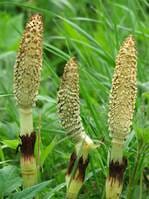
Figure 1 Common horsetail fertile stem
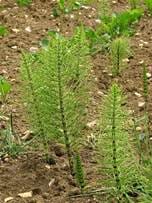
Figure 2 Common horsetail infertile stem
Common horsetail
Common Horsetail aka Equisetum arvense aka Allostelites arvensis (L.) is fascinating. They are a close relative of ferns, fossilised members of the horsetail family have been dated to 350 million years ago. It grows in the Northern hemisphere, in most conditions, a perennial weed (BSBI, n.d.; Hodge, 2013; RBGK, 2023).
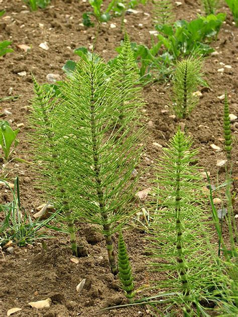
In spring the fertile stem grows, at the top is a spore containing structure, the spores fly off in the wind and thus reproduce. The plant can also reproduce from rhizome fragments. In Summer a second stem grows, it is infertile, with green needle like leaves, this stem is used in herbal medicine. (Chevellier, 2023; Elpel, 2021; Stodola & Volak, 1992).
What does it do? It reduces inflammation (anti-inflammatory), provides a range of minerals needed by the body (nutritive), heals wounds internally and externally (vulnerary).
What conditions can it be used for? It is used in osteoporosis, osteopenia, rheumatism, atherosclerosis, sprains, breaks, strains, arthritis, brittle or damaged teeth, hair and nails (Hoffmann, 2003; McIntyre, 2013).
What constituents are in common horsetail, what do they do? Horsetail contains silica, magnesium, manganese, potassium and calcium in soluble form. Magnesium and calcium rebuild bones, potassium increases bone mineral density, manganese remineralises and regenerates bones which increases their strength and silica regenerates bone. These make the plant vulnerary and nutritive. It also contains apigenin, luteolin (flavones), kaempferol and quercetin (flavonols) which are anti-inflammatory (Ganora, 2021;Ha et al, 2020; McIntyre, 2019; Royal Osteoporosis society, 2026; Taskozhina et al, 2024).
Fresh horsetail contains thiaminase, which breaks down vitamin B1, it should only be used for a short time or with a B1 supplement. People with heart and kidney issue and swelling must be cautious. This is also discussed on @Herbal Reality (Elpel, 2021; Mills&Bone, 2005).
Do you have a family history of osteopenia or osteoporosis? Do the older women in your family break bones easily? Would you like to have a herbal option to support YOU? Then, send me an email (442987@yahoo.co.uk) and sign up for my monthly newsletter (Herbs with 442987) It could be the most important thing you do today!
I am a practicing medical herbal trained by Betonica, School of Herbal Medicine @Betonica .
Social Media post
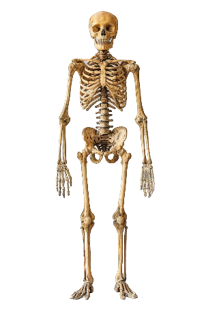
Why do these 2 pictures belong together?
Let me tell you!
Common horsetail is used to regenerate bones. This is particularly important for everybody over 40, but especially peri and post-menopausal women. Head over to my blog (Herbs with 442987) and let me tell you all about it.
References
Botanical society of Britian and Ireland (n.d.) Equisetum arvense L., field horsetail retrieved on 13th October 2026 from https://bsbi.org/in-your-area/local- botany/co-fermanagh/fermanagh-species-accounts/equisetum-arvense-l
Chevallier, A., (2023). Encyclopedia of herbal medicine. Dora Kindersley.
Colledge, N., Walker, B., Ralston, S., (2010). Davidson’s Principles & practice of medicine. Elsevier.
Elpel, T., (2021). Botany in a day. (6.2 edition). HOPS press.
Ganora, L., (2021). Herbal constituents foundations of phytochemistry. (2nd edition). Herbalchem Press.
Ha, J., Kim, S., Lim, K., Shin, S., (2020) The association of potassium intake with bone mineral density and the prevalence of osteoporosis among older Korean adults. National library of medicine retrieved on 13th October 2026 from https://pmc.ncbi.nlm.nih.gov/articles/PMC6997142/
Hodge, G., (2013). RHS botany for gardeners. Mitchell Beazley
Hoffman, D., (2003). Medical herbalism. Healing Arts Press.
McIntyre, A., (2019). The complete herbal tutor. Aeon Books.
Mills, S., & Bone, K., (2005) The essential guide to herbal safety. Churchill Livingstone
Parker, S., (2019). The concise human body book. Dorling Kindersley
Royal Botanic Gardens Kew (RBGK) (2023) Equisetum arvense L. Plants of the World Online (POWO) retrieved on 13th October 2026 from https://powo.science.kew.org/taxon/urn:lsid:ipni.org:names:300073-2
Royal osteoporosis society, (2026). Other vitamins and minerals for bone health. Royal osteoporosis society retrieved on 13th October 2026 from https://theros.org.uk/information-and-support/food-and-supplements/other- vitamins-and-minerals-for-bone-health/
Simak, E., (2009) Equisetum arvense Geograph photograph every grid square retrievedon 20th October 2026 from https://www.geograph.org.uk/photo/1255082
Simak, E., (2008) Equisetum arvense Geograph photograph every grid square retrievedon 20th October 2026 from https://www.geograph.org.uk/photo/828907
Stodola, J., &Volak, J., (1992) The illustrated encyclopaedia of herbs, Chancellor Press
Taskozhina, G., Batyrova, G., Umarova, G., Issangizhina, Z.,Kereyeva, N.,(2024) The Manganese–Bone Connection: Investigating the Role of Manganese in Bone Health National Library of medicine retrieved on 13th October 2026 from https://pmc.ncbi.nlm.nih.gov/articles/PMC11355939/
The endocrine society, (2022) Menopause and bone loss retrieved on 13th October 2026 from https://www.endocrine.org/patient-engagement/endocrine- library/menopause-and-bone-loss
Waugh, A., & Grant, A., (2023), Ross and Wilson Anatomy and physiology in health and illness, (14th edition). Elsevier Ltd.