Nature’s Cleansing Spring Tonic: Stinging Nettle for Cystitis and Kidney Health

Author: Student no. 427544
Synonyms:
- Urtica dioica subsp. eudioica Selander
- Urtica dioica var. latifolia Ledeb.
- Urtica dioica var. vulgaris Wedd.
(POWO, n.d.)
Family: Urticaceae
Cystitis—most commonly presenting as a lower urinary tract infection—is inflammation of the bladder following entry of bacteria through the urethra, the canal that connects the bladder to the exterior (Waugh & Grant, 2018). Symptoms include painful and frequent urination, often accompanied by lower abdominal discomfort. While uncomplicated acute infections may resolve quickly, recurrent bouts can disrupt daily life and lead to chronic irritation, with a risk of untreated infection spreading to the kidneys or bloodstream (Waugh & Grant, 2018).
Nettle leaf acts as a gentle yet effective diuretic, increasing urine output and excretion of waste products, such as uric acid (McIntyre, 2019). This flushing of the kidneys and bladder helps to clear stagnant infected urine associated with cystitis. Nettle also aids excretion of kidney gravel, reducing the chance of kidney stones (McIntyre, 2019).
Rich in flavonoids (such as quercetin) and phenolic acids, nettle leaf exerts significant anti-inflammatory and antioxidant actions that soothe irritated bladder walls (Herbal Reality, 2025). Furthermore, its mild astringent properties due to tannins help tone and tighten inflamed bladder tissue (Boon & Smith, 2004).
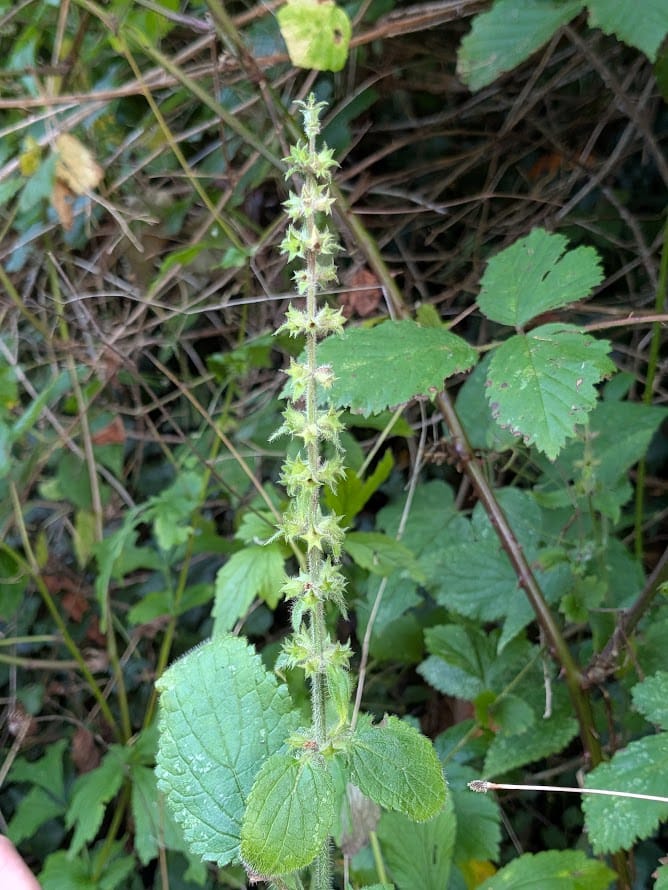
While nettle is safe for most people, caution is required. Handling the fresh herb can cause skin irritation due to chemicals released from the stinging hairs (Fisher, 2018). Avoid ingesting older or flowering nettle leaves, as there can be a build up of minerals such as oxalate that can paradoxically irritate the kidney (Hoffmann, 1992). Due to its pronounced diuretic action, nettle should be used carefully by individuals already taking diuretic or blood pressure lowering medications, and avoided in severe kidney or heart disease (McIntyre, 2019).
Certain sources report that nettle can stimulate the uterus (Herbal Reality, 2025), therefore it is best avoided in pregnancy. However it can increase milk production in breastfeeding mothers, therefore could be used under the supervision of a medical herbalist (McIntyre, 2019).
Nettle is a highly sustainable and resilient plant, with its conservation status ranked as “Least Concern” by the Botanical Society of Britain and Ireland (Leach S.J. Walker K.J., 2020). Despite its abundance in the wild, it is important to be mindful of over-harvesting and habitat loss, therefore be sure to forage considerately or buy nettles from sustainable sources (Herbal Reality, 2025).
Accessing Herbal Support
If you experience recurring cystitis or urinary discomfort, working with a qualified medical herbalist can help uncover root imbalances. Professional guidance ensures safe formulation, proper dosage, and appropriate medical screening. For further information, please get in touch with Betonica School of Herbal Medicine to book a consultation.
Fisher, Carole. (2018). Materia Medica of Western Herbs. Aeon Books.
Herbal Reality. (2025, December 29). Nettle (Urtica dioica): Benefits, Uses, Safety | Herbal Reality. Available at: https://www.herbalreality.com/herb/nettle/
Hoffmann, David. (1992). The new holistic herbal : a herbal celebrating the wholeness of life. Element.
Leach S.J. Walker K.J. (2020). Urtica dioica - Botanical Society of Britain & Ireland. Available at: https://bsbi.org/taxa/2cd4p9h.9c0/urtica-dioica
McIntyre, Anne. (2019). The Complete Herbal Tutor : the Definitive Guide to the Principles and Practices of Herbal Medicine, Second Edition. Aeon Books Limited.
POWO. (n.d.). Urtica dioica L. | Plants of the World Online | Kew Science. Retrieved October 19, 2026, from https://powo.science.kew.org/taxon/urn:lsid:ipni.org:names:260630-2#synonyms
Waugh, Anne., & Grant, Allison. (2018). Ross & Wilson anatomy and physiology in health and illness. Elsevier.
Figure List
Figure 1: Nettle tea. Accessed at: https://www.healthline.com/health/food-nutrition/nettle-tea#urinary-tract-health
Figure 2: Flowering nettle stem. Image Author’s own
Tired of the constant urge and discomfort of cystitis? 🍵 Discover how humble stinging nettle (Urtica dioica L.) acts as a natural diuretic and anti-inflammatory tonic to gently flush and soothe your urinary tract. Read our latest student blog for expert insights on safe herbal support!
Don't forget to connect with our professional community at @betonicaschoolofherbalmedicine and herbal experts @herbalreality to learn more about herbal medicine. 🌿✨ #HerbalMedicine #Nettle #Cystitis #NaturalHealth #PlantMedicine #Betonica #HerbalReality