Horsetail - earth's oldest medicine
By 488478, student medical herbalist
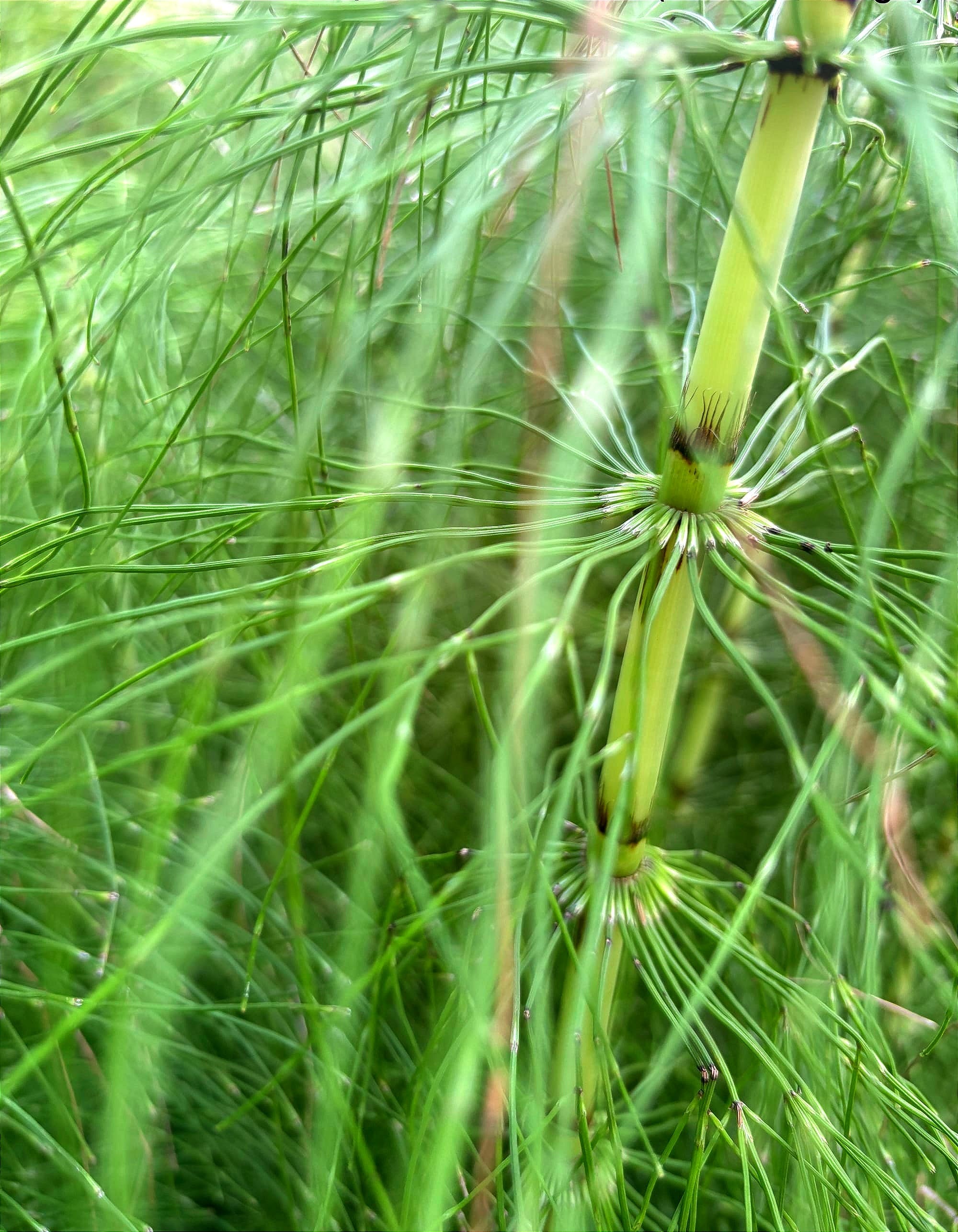
“Equisetum, horsetail, railway weed
Laid down in the unconscious of the hills;
Three hundred million years still buried
In this hair-soft surviving growth ”
(Stevenson, 2005)
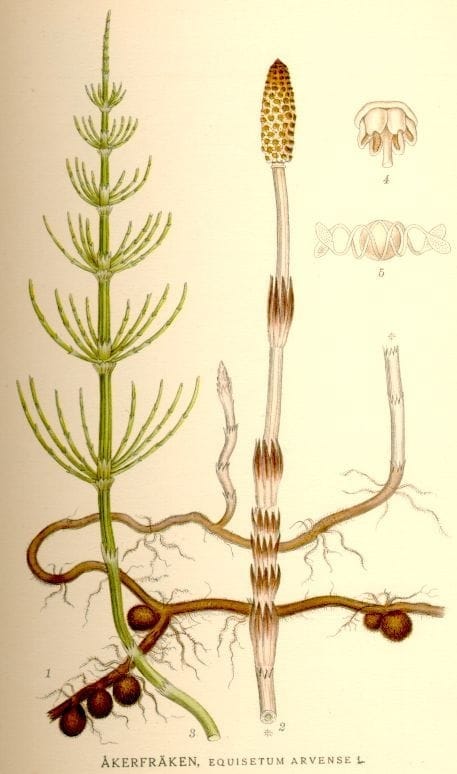
Horsetail, bottlebrush, railway weed, shave grass, Equisetum arvense L. (Grieve, 1977). One of our oldest surviving plants; its direct descendants thrived in swamps that created the blackened coal seams Stevenson explores in her poetry. This plant springs from creeping rhizomes (figure 2), lining our roadsides, damp wild spaces and can be prolific. What many gardeners now pronounce a weed might well be a living archive and an important herb with a long history of traditional use. What does this botanic wonder offer us?
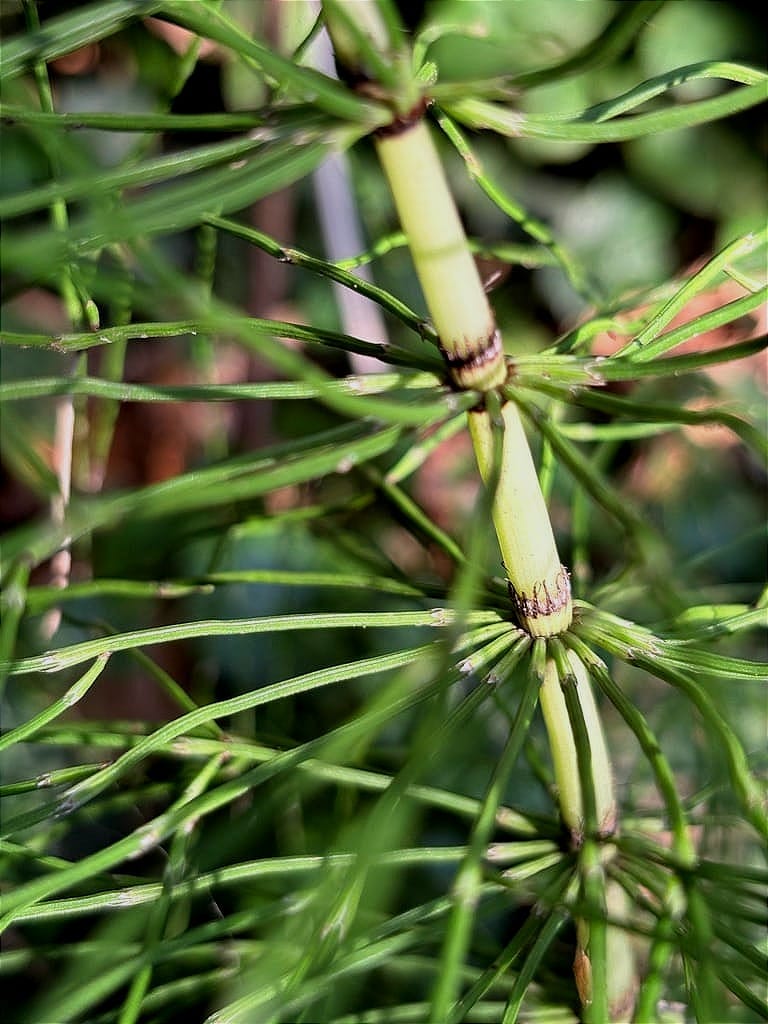
There may be something quietly revealing about the structure of Horsetail, it looks almost like a chain of vertebral bone. It feels curious, then, that these jointed stems have been used in herbal medicine to strengthen our bones, cartilage, connective tissue, nails and hair.(McIntyre, 2019). According to herbalist Mathew Wood (1997, p.254), it is the high silica content within the plant that gives it 'an affinity to hard structures throughout the body'. It is thought that silica also helps controls the absorption of calcium so necessary in the functioning of our musculoskeletal system (Chevalier, 2021).
Steeping in a bath of horsetail is said to help with slow healing sprains, fractures, rheumatic pain and chilblains (Hoffman, 2003). Tannins within the plant give an impressive astringent quality, toning tightening and in supporting the integrity of the blood vessels encouraging elasticity and addressing varicose veins (Wood, 1997).
Beyond its astringent properties, Horsetail is also a vulnerary, a diuretic and a plant with anti-inflammatory actions (Hoffman, 2003). The seventeenth-century herbalist Nicholas Culpeper wrote of its remarkable vulnerary abilities declaring it “very powerful to stop bleeding either inward or outward” (1880, p. 194). There are more recent reports that it does help to increase the coagulability of blood (Bartram, 2001).
So how might we use this dinosaur snack and ancient healing herb? As with any plant, care must be taken as the high silica content so use sparingly and sporadically (Farrell, 2021). This herb can be taken as a tea, a tincture, in a bath or as a poultice (Bartram, 2001).
Horsetail Tea
A recipe to support with connective tissue, healing bones, joints, ligaments:
- 25g horsetail
- 30g nettle leaf
- 20g oatstraw
- 25g calendula flowers
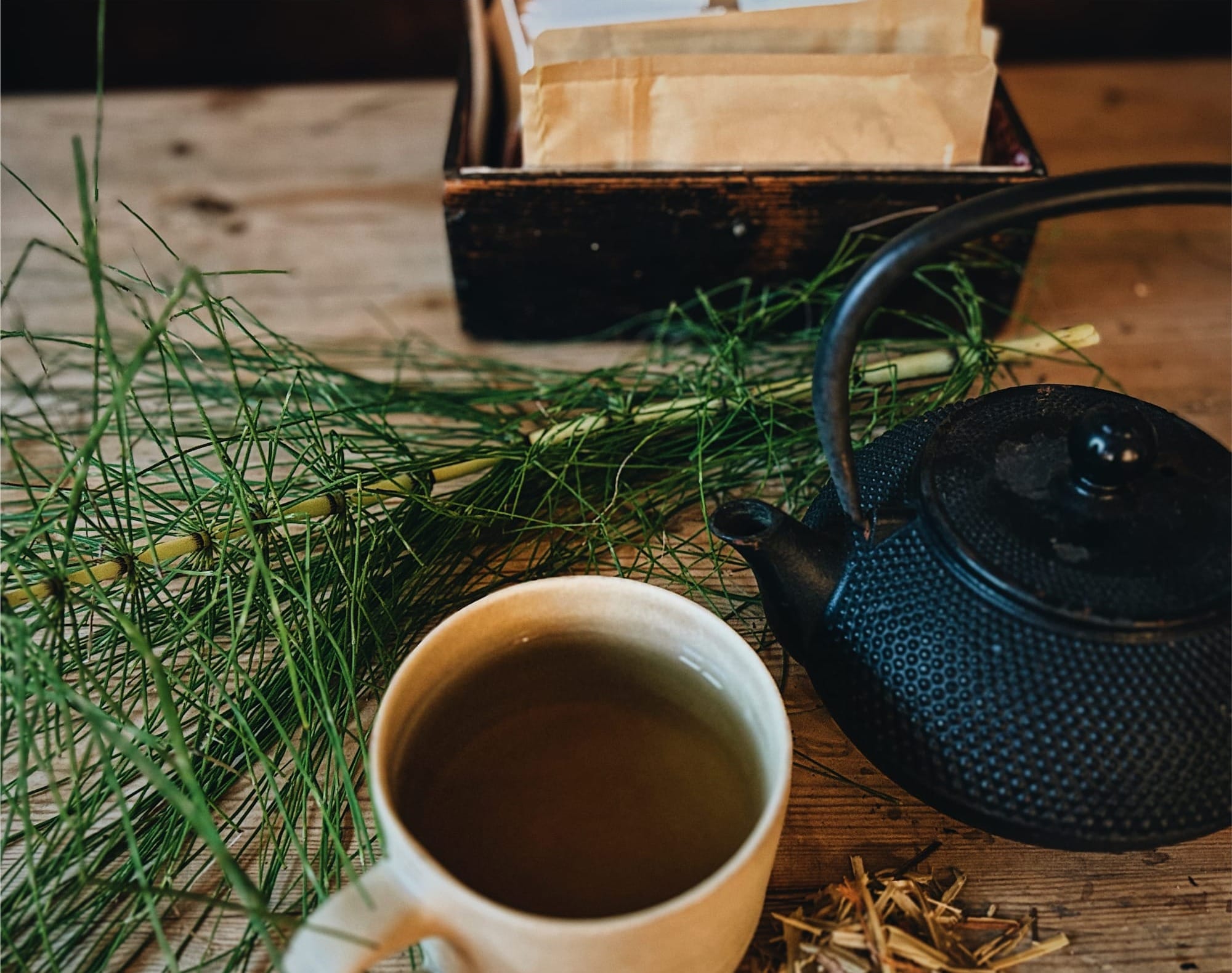
Blend all the herbs together. Use two teaspoons per cup and allow to steep for five minutes, then strain and drink. Drink for a maximum of one week before taking a break (Herbal Reality, 2023).
For those who enjoy foraging, responsible identification and ethical harvesting are always essential. Collect in early summer and consider not only where the plant grows, but also where it's drawing its resources; it is mineral rich which can concentrate contaminants from the soil (Wood, 1997). Further cautions; constituents of Horsetail contain thiaminase, an enzyme that may break down vitamin B1. Avoid during pregnancy and those with kidney issues due to the heavy mineral content (Farrell, 2021).
This incredible plant grows at the damp roadsides and the edges of our attention, it offers us rich healing and connection to our landscape and to our past and invites us to seek out the plants we overlook and wonder what else we might discover.
References
Bartram, T. (2001). Bartram's encyclopedia of herbal medicine. The definitive guide to the herbal treatment of diseases. Robinson.
Chevalier, A. (2023). Encyclopedia of herbal medicine. Dorling Kindersley.
Culpeper, N. (1880). Culpeper’s complete herbal: Consisting of a comprehensive description of nearly all herbs with their medicinal properties and directions for compounding the medicines extracted from them. Foulsham. (Original work published 1652).
Farrell, H. (2021). Healing with plants; the Chelsea physic garden herbal. Aster.
Herbal Reality. (2023). Horsetail (Equisetum arvense): Benefits, safety, uses. https://www.herbalreality.com/herb/horsetail/ (accessed 17/10/2026).
Hoffman, D. (2003). Medical herbalism; the science and practice of herbal medicine. Healing Arts Press.
McIntyre, A. (2019). The complete herbal. Aeon Books.
Stevenson, A. (2005). Forgotten of the foot. Poetry Foundation. https://www.poetryfoundation.org/poems/49918/forgotten-of-the-foot
Wood, M (1997). The book of herbal wisdom; using plants as medicines. North Atlantic Books.
Figures
Lindman, C. A. M. (1917–1926). Equisetum arvense nf [Botanical illustration]. PICRYL. https://picryl.com/media/equisetum-arvense-nf-1f3622