Herb Profile: Great Mullein
Verbascum thapsus L.
Scrophulariaceae
Student Medical Herbalist, 434111
A Breath of Fresh Air
Mullein is a "premium" respiratory remedy most useful for seasonal coughs, colds and congestion (Wood, 2008).
Folklore & Historical Uses
The use of Mullein dates back thousands of years and in many texts is credited with having magical properties as well as potent medicinal benefits (Chevallier, 2019). Witches of old were said to have soaked dried stems in oil to use as torches, earning the name "hag tapers". Mullein’s leaves and flowers have often been used in combination with other expectorants in teas, tinctures and syrups for bronchitis and inflamed mucosa and in herbal smoke remedies to relieve coughing spasms. An infused oil made from the vibrant yellow flowers has also been used as a remedy for earache and nerve pain (Hedley, 2023).
Botanical Features
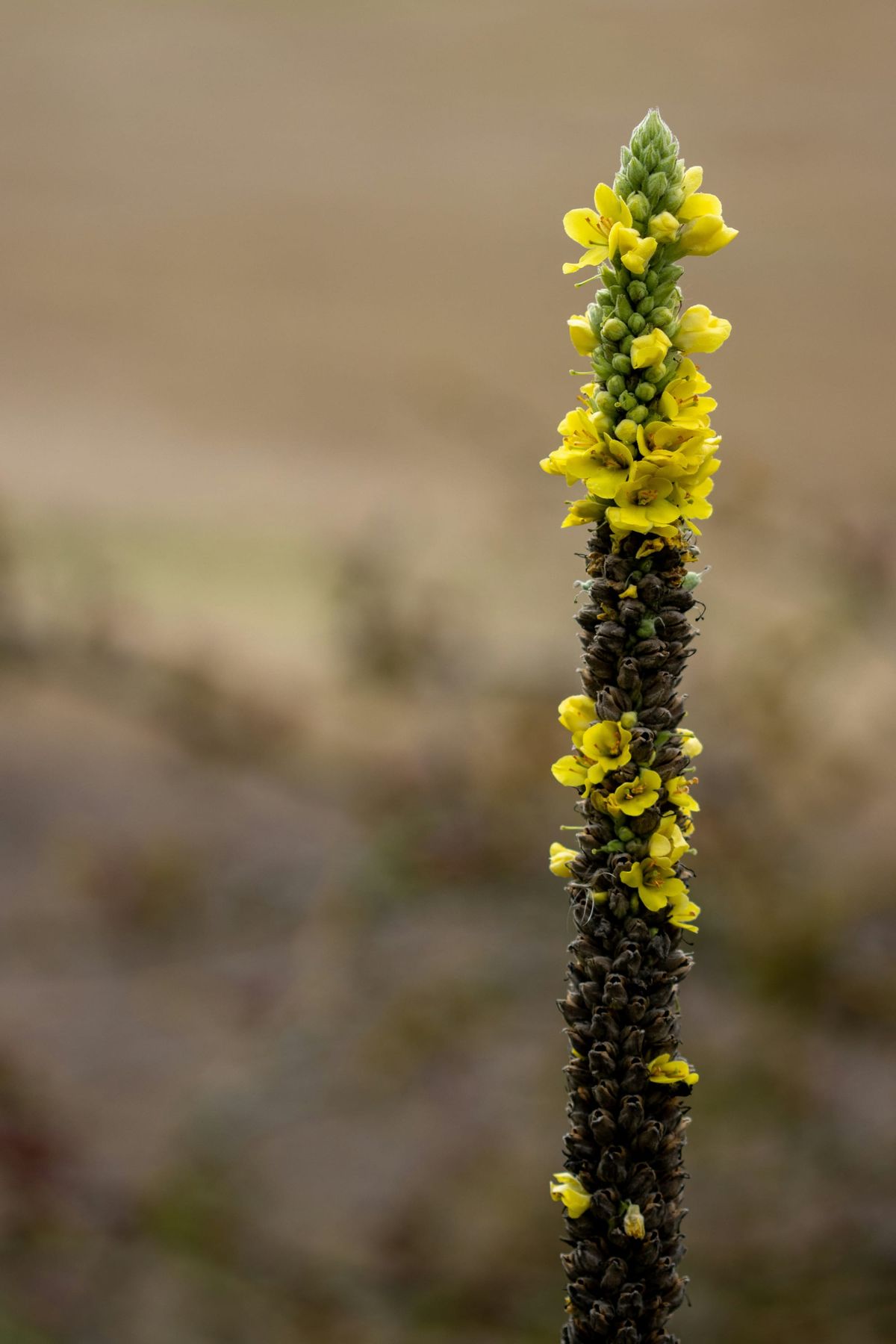
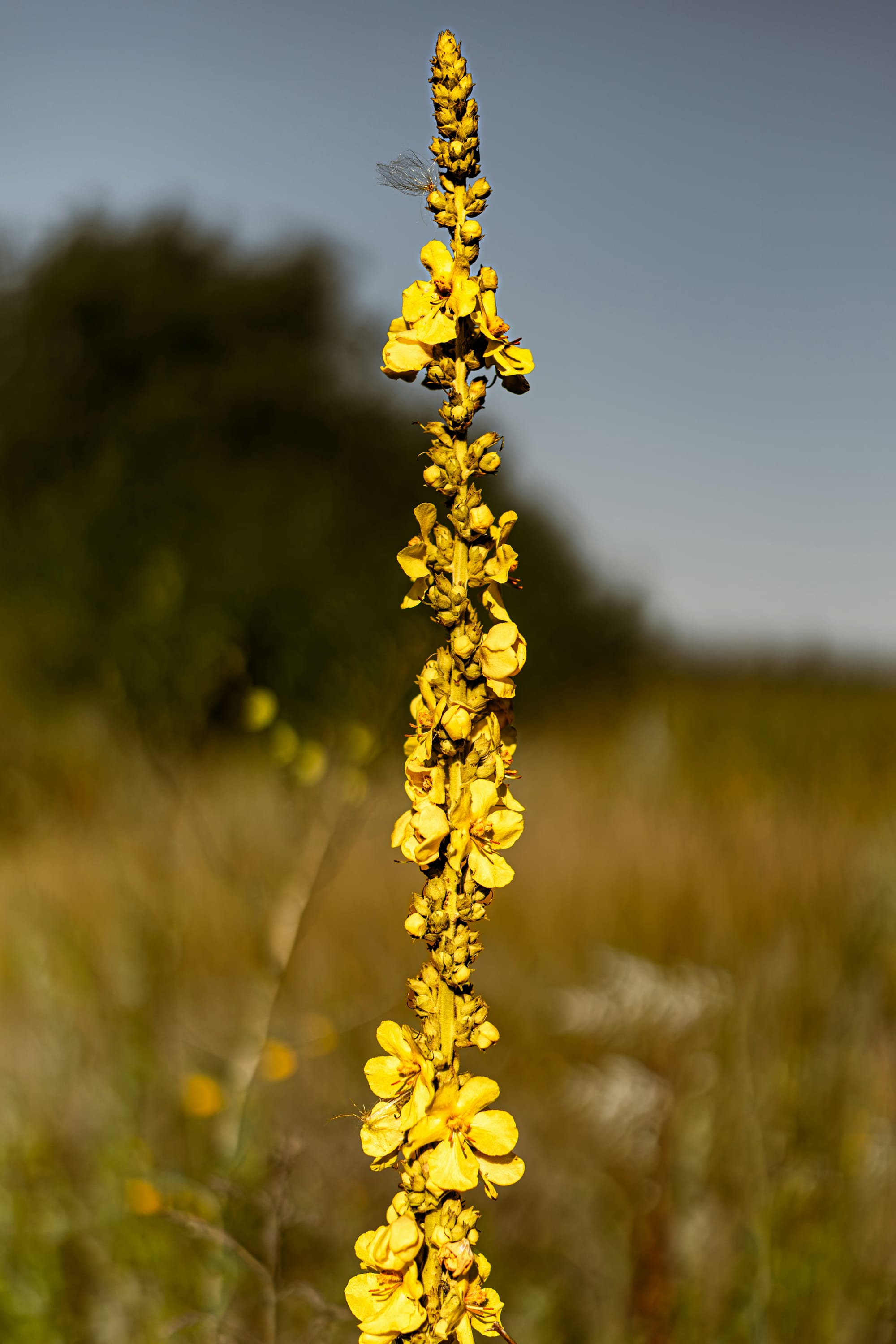
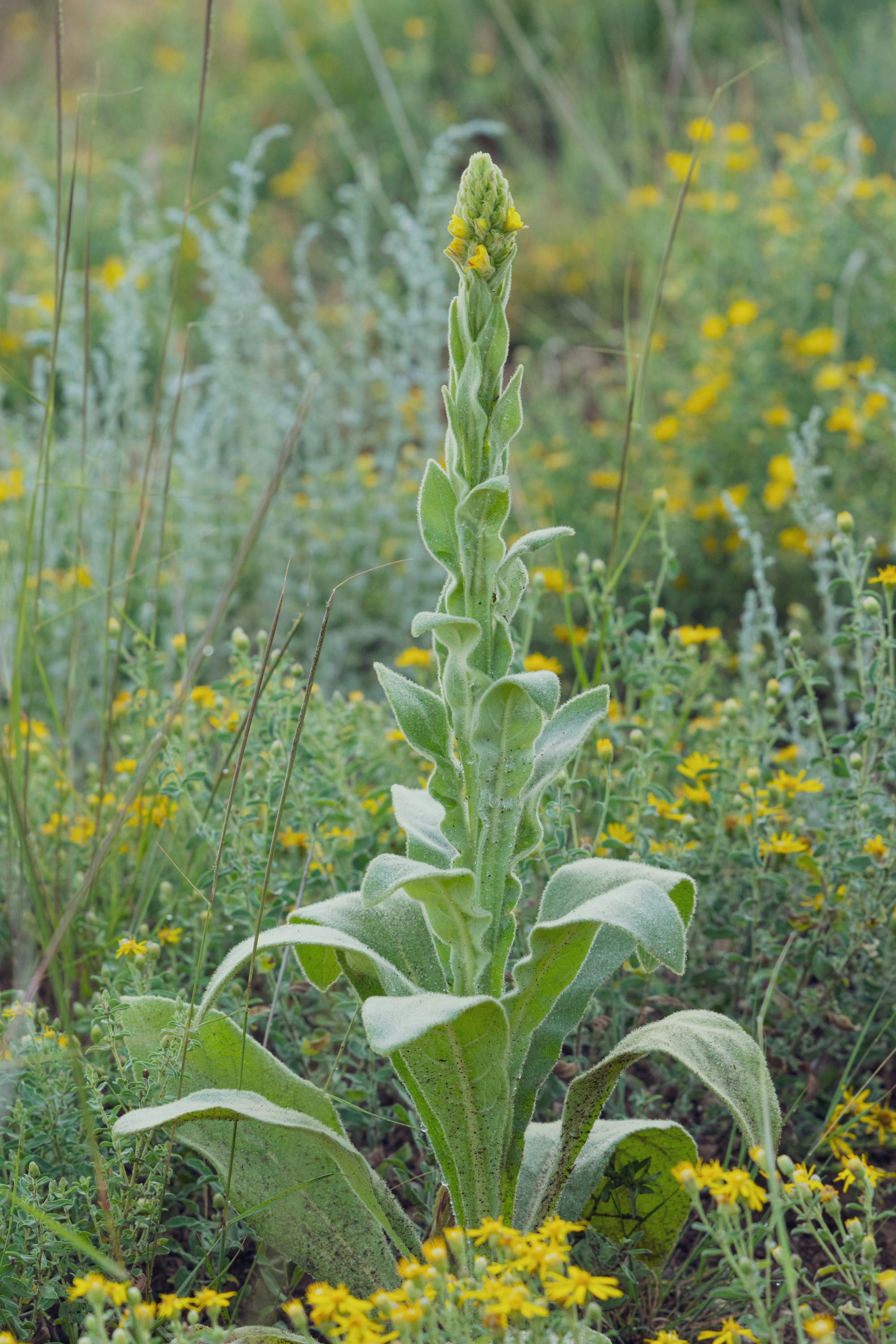
Mullein starts its life cycle as a soft, woolly-leaved rosette low to the ground until it shoots up a tall flower spike in its second year. This herbaceous biennial grows up to 3.5m tall and produces a dense terminal spike of 5-petalled yellow flowers (Mills, 1989).
Herbal Benefits
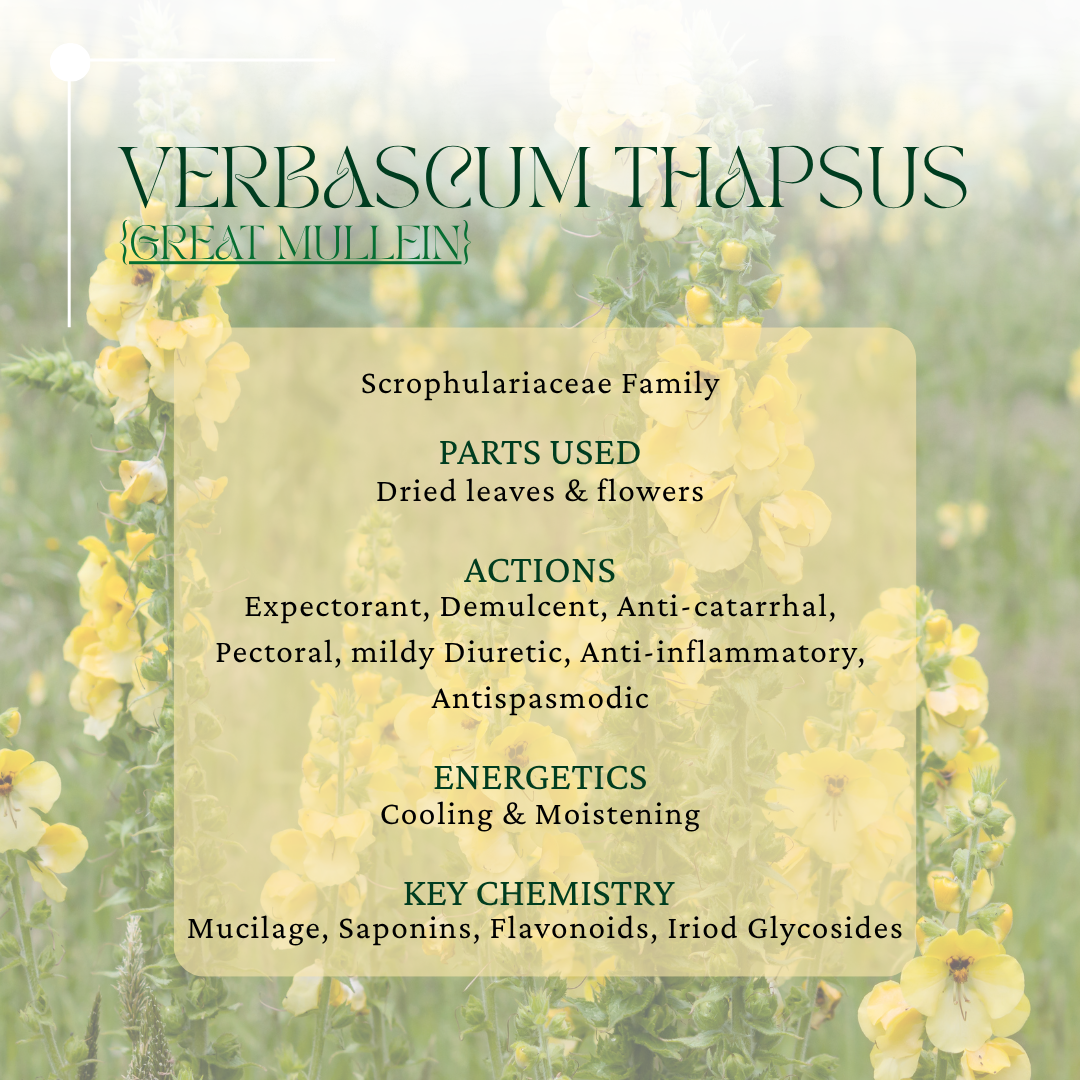
Medicinal Actions: Expectorant, Demulcent, Anti-catarrhal, Pectoral, mildly Diuretic, Anti-inflammatory, Antispasmodic (Hoffmann, 1996).
Indicated for dry, tickly coughs, this nourishing expectorant tones inflamed mucus membranes, reduces tightness in both the chest and the sinuses. By lubricating the mucosa, it helps to soothe inflammation whilst stimulating fluid production, making it a key herb for seasonal colds, sore throats and swollen glands (Hoffmann, 1996).
Energetics: Cooling and Moistening (Easley, 2016).
Key Constituents: mucilage, saponins, flavonoids, iridoid glycosides, phenolic acids (Fisher, 2018; Thomsen, 2022).
Its mucilage content is soothing to the mucus membranes lining the lungs, throat and sinuses. The saponins help to soften and clear the mucus from these airways which promotes expectoration and eases breathing (Hedley, 2023).
Cautions & Safety Considerations
In its first year of growth, this perennial bears a resemblance to the toxic Foxglove, so if you find yourself second guessing your identification skills, please wait until you see its flowering spikes in the second year, and be sure to only pick its young leaves.
While the flowers and leaves are generally regarded as safe, the hairs may cause irritation in some individuals and the seeds contain rotenone and are best to be avoided (Easley, 2016).
Sustainability Status
Not currently at risk (Horsfall, n.d.).
Practitioner Recommendations
Used in combination with Elderflower, Coltsfoot and Thyme for short-term, acute respiratory infections which exhibit a dry, unproductive cough, sore throat, swollen glands and fever (Chevallier, 2016; Hoffmann, 1996).
However, if symptoms persist for longer than 2 weeks, please seek medical advice. Always speak to a trained Medical Herbalist or qualified medical practitioner before treating yourself with herbs.
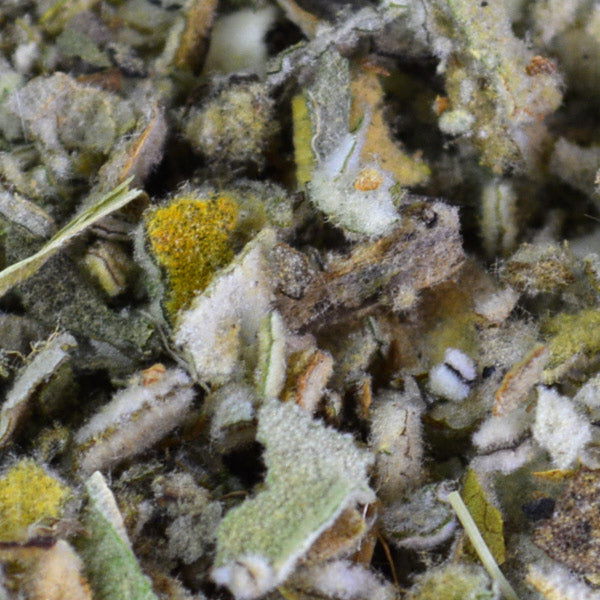
Mullein can be bought online, or in-person at local herbal clinics or from reliable, organic wholesale suppliers such as those featured below.


 Baldwins
Preparations & Dosages
Infusion: 1-2 tsp dried herb 3 times daily
Tincture: 1-4ml 3 times daily
Syrup: 1 tbsp 3 times daily
A Moistening Cough Syrup ~ A formula to moisten dry, unproductive coughs and expel trapped mucus.
2 parts Mullein
2 parts Marshmallow
2 parts Plantain
1 part Liquorice
1/2 part Pleurisy Root
1/2 part Lobelia
(Easley, 2016)
This vibrant plant has been used for respiratory remedies for thousands of years!
Perhaps best known for its ability to soothe inflamed mucous membranes, this nourishing expectorant is the perfect herb for the changing season!
Link in bio for full monograph
Check out @herbalacademy for more seasonal monographs
Student Medical Herbalist @betonicaschoolofherbalmedicine
References
Chevallier, A. (2016). Encyclopedia of herbal medicine. Dorling Kindersley.
Easley, T., Horne, S. (2016). The modern herbal dispensatory: a medicine-making guide. North Atlantic Books.
Fisher, C. (2018). Materia medica of western herbs. Aeon.
Hedley, C., Shaw, N. (2023). Plant medicine. Aeon
Hoffman, D. (1996). The complete illustrated holistic herbal: a safe and practical guide to making and using herbal remedies. Element Books Limited.
Horsfall, A. (n.d.). Verbascum thapsus L. (great mullein). Botanical Society of Britain & Ireland. https://bsbi.org/taxa/2cd4p9h.w59/verbascum-thapsus
Mills, S. (1989). The complete guide to modern herbalism. Thorsons.
Wood, M. (2008). The earthwise herbal: a complete guide to old world medicinal plants. North Atlantic Books.
Figures
Cooke, D. (2020). The growth cycle of Verbascum thapsus flowers. [Photograph]. Unsplash. https://unsplash.com/photos/yellow-flower-in-tilt-shift-lens-8e7fvze0XS8
Shved, A. (2026). Verbascum thapsus flower stalk in a sunlit meadow. [Photograph]. Unsplash. https://unsplash.com/photos/yellow-mullein-flower-stalk-yVFvaJWUTRE
Stoll, B. (2024). Fuzzy-leaved Verbascum thapsus. [Photograph]. Unsplash. https://unsplash.com/photos/a-green-plant-with-yellow-flowers-in-a-field-OnnWqlb-d8c